How Bojen Electrical prices Oxford's most historic buildings with Countfire

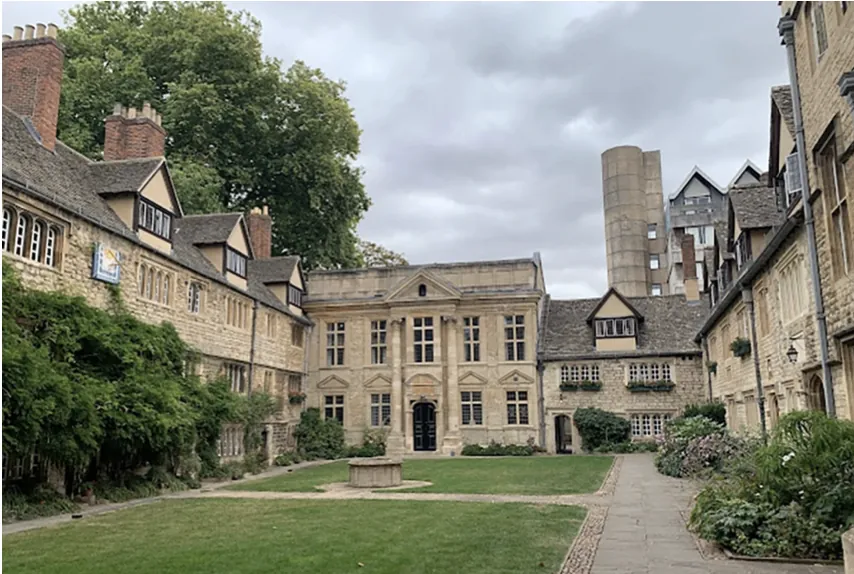
We spoke with Craig, Director at Bojen Electrical, about pricing a £2.5 million lighting refurbishment entirely on Countfire, why a permanent record matters more than raw speed, and the reason he calls automated estimating a game changer.
About Bojen Electrical
Bojen Electrical has been trading for 22 years, employing around 36 people, with 28 out on site and a small office team behind them. Much of their work is in Oxford, where they’ve worked on university buildings, the Science Park, the hospital and several colleges, including a library refurbishment at St John’s College where the bookcases were around 400 years old. They’re currently working on another library project at Hertford College.
As the business has grown, estimating has grown with it. Bojen recently took on a full-time estimator and set up a dedicated estimating department, moving away from the old approach where whoever was available priced whatever came in.
Why Craig went looking for something better
Craig was the one who pushed for a change. Counting on paper drawings meant juggling highlighters, count sheets and the constant risk of losing work.
“I really struggled with keeping track of all the counts on a drawing. I was looking for a solution that would generate a takeoff once you’d done the work on the computer. It’s something that can be retained. You don’t lose it like a bit of paper, it’s always in the system.”
He first heard about Countfire through word of mouth, from an estimator who joined the business having used it at his own company, and has been a customer since 2018.
Faster takeoffs, and a better understanding of the job
Craig’s workflow is straightforward: when a tender comes in, he uploads the drawings, works through them with Countfire’s automatic symbol recognition, and generates his takeoff from there.
“It’s faster for me. But it’s having that information that’s always there, that you can go and amend. You’ve got a permanent record of what you’ve done. You never lose a count list and have to restart. That saves more time than anything.”
There’s a less obvious benefit too. Working through the drawings on screen, highlighting and checking as he goes, gives Craig a clearer picture of the job itself.
“You see what’s on the drawings, but that’s not always the full story when you tender a project. When you spend time going through it, you start to notice things you might not notice doing a quick takeoff. It helps me understand how the job’s actually going to work.”
He’ll often complete the takeoff before reading the tender documents in full, using it as a map of what’s coming before double-checking the details.
A £2.5 million project, priced entirely on Countfire
One recent example is a major lighting refurbishment at a chemistry research building in Oxford, a project worth around £2.5 million that Craig priced 100% on Countfire.
With four drawings per level, he used Countfire to split each floor into zones and keep the counts clean. He explains, “you could put your demarcation in and you’ve got your cut-off point for each zone. It just helps on the count.”
A short learning curve
Not everyone at Bojen Electrical works the same way. Some of the team still prefer manual methods, and Craig is happy for experienced estimators to work however suits them. But for anyone open to it, he says the learning curve is short. “It’s a game changer for me,” Craig says, “I think it took me four or five estimates to work out my own way of doing it. Within a couple of hours you could have somebody up and running.”
His advice for anyone hesitant about moving away from highlighters:
“Bite the bullet. It may take longer for the first couple of takeoffs while you learn, but once you’re into it, it certainly speeds you up. And the biggest thing is that it’s doing it automatically. You’re not putting little notches everywhere and counting in your head. It does it for you.”
Cutting costs: The savings beyond speed
Craig is quick to point out the practical costs that disappear when takeoffs move on screen. There’s no need to lay out A1 and A0 drawings across a desk, something many offices simply don’t have space for, and no printing just to put a marker on a page.
“There are probably thousands of drawings I’ve put through Countfire that I haven’t had to print. You start looking at the cost of ink and paper, and the footprint as well. You’re not cutting down trees to do a takeoff.”
And on the cost of the software itself, he’s blunt:
“It’s money well spent. If you’re a million pound, two million pound company, what percentage of your turnover is that? We’re talking less than 0.1% for most people.”
Why Bojen Electrical uses Countfire
- Takeoffs completed much faster than manual counting
- A permanent record of every count, available anywhere, that can’t be lost
- Work areas and zones that keep counts clean on multi-drawing levels
- Symbol and background toggling for fast final checks
- Significant savings on printing, paper and office space
- New estimators up and running within a couple of hours
Final thoughts
For Craig, the case for Countfire comes down to certainty as much as speed. “What you get at the end is the bit that I really like,” explains Craig, “you’ve got your final count of all the bits and pieces, so you’ve always got something to check against, and it’s always there.”
Find out what you could save on your next tender. Upload your own drawings and do your first takeoff with Countfire free, no card details needed.
Related case studies

Wachter: tailored training and bespoke features that transformed estimating
With estimating teams spread across the business and a high volume of bids to manage at any one time, having the right tools and the confidence to use them well is essential.
Read case study
How Lassiter Electric reached 99% takeoff accuracy using Countfire
Find out how Lassiter Electric dramatically improved estimating speed, and reduced takeoff errors using automation.
Read case study
Freedom Bridge Consulting on why Countfire is essential for electrical estimators
We sat down with Rae Makepeace, Owner & Lead Consultant at Freedom Bridge Consulting, to hear how Countfire has transformed the way she works.
Read case study